
At-Home Therapies & Exercises for People Living with Dementia
At-Home Therapies & Exercises for People Living with Dementia
When someone you love is living with dementia, the rhythm of everyday life often changes. Familiar routines may take longer, and conversations can feel different from one day to the next.
In that shifting landscape, many families begin to notice that comfort rarely comes from doing more. It shows up in quieter ways, often by slowing down and meeting one another where you are. Gentle at-home therapies make room for those moments. They are simple and familiar, offering presence and reassurance without expectation or pressure.
The Benefits of Gentle At-Home Therapies
At-home therapies are not meant to measure progress or alter the course of dementia. Their value is quieter than that. They support how a person feels in the moment and how a day unfolds.
Families often notice that these gentle practices help:
- Ease moments of restlessness or emotional tension
- Support connection when conversation becomes harder
- Reinforce a sense of comfort through familiar surroundings
- Bring a steadier rhythm to transitions, rest, and daily routines
Some of these moments last only a few minutes. Others linger. Either way, they matter. Over time, they can become small points of steadiness in a relationship that is continually changing.
What Are At-Home Dementia Therapies?
At-home dementia therapies are simple, non-clinical activities that support emotional and sensory well-being. They’re not focused on memory recall or completing a task correctly.
What sets them apart from traditional exercises is their tone and intention:
- There is no right or wrong way to take part
- Attention is placed on comfort and presence, not performance
- Activities are meant to feel familiar and safe
Most require little preparation and can be adapted over time as needs change. What matters most is not the activity itself, but the feeling it creates.
Simple At-Home Therapies to Try
Aromatherapy for Dementia
Scent can gently influence the emotional atmosphere of a space. When used with intention, aromatherapy can add a sense of calm or lightness to the day without overwhelming the senses.
Thoughtful scents include:
- Lavender, often associated with relaxation
How to use: Diffuse 2–3 drops for about 20 minutes before bedtime.
- Lemon, which can feel bright and refreshing
How to use: Diffuse mid-morning or place one drop on a cotton ball nearby.
- Peppermint, known for its crisp, clean aroma
How to use: Use an aromatherapy inhaler for 1–2 slow breaths.
A few important guidelines:
- Avoid diffusing continuously throughout the day.
- Introduce only one scent at a time.
- Never apply essential oils directly to skin without proper dilution.

Sensory Box Therapy
As words become less reliable, touch often remains deeply reassuring. A sensory box offers a quiet invitation to explore familiar textures without instruction or expectation.
Items might include:
- Fabric squares such as corduroy, silk or fleece
- Wooden objects like a spoon or small block
- Smooth stones
- Familiar household items, including old keys or a measuring cup
How to share the experience:
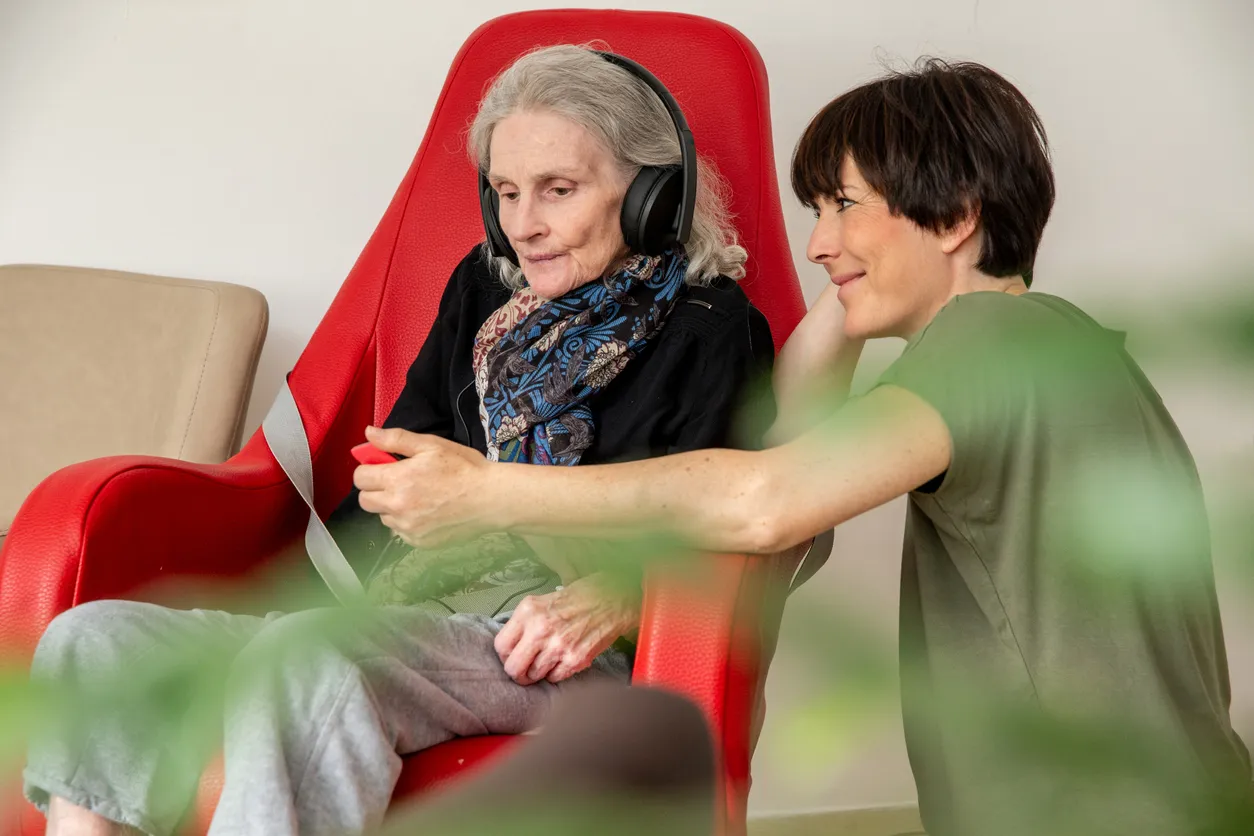
Sit together and allow exploration to unfold naturally. A simple prompt such as, “How does this feel?” is enough. 10-15 minutes is usually plenty.
Music & Rhythm Therapy
Music often carries emotional memory long after other forms of recall feel uncertain. A familiar song can offer comfort and a moment of shared joy.
Simple ways to engage include:
- Creating a playlist from early adulthood, roughly ages 15 to 30
- Gentle clapping along to a familiar tune
- Using simple instruments like a shaker or tambourine
- Singing short phrases together in a call-and-response style
If music appears to increase agitation, turning it off and allowing quiet can be just as supportive. Paying attention to the response matters more than finishing the activity.
Chair-Based Movement
Light, seated movement can support comfort and body awareness without strain.
A short routine might include marching feet while seated, slow arm lifts paired with breathing, shoulder rolls, ankle circles, or gentle torso twists. Five to ten minutes is sufficient.
Late morning or early afternoon often feels best. Evening movement may be less settling for those who experience sundowning.
Hand Massage & Warm Touch
Warm, intentional touch can communicate safety and care when words fall short.
A simple approach might begin with a warm towel wrapped around the hands for a minute or two, followed by unscented lotion and slow, steady strokes from palms to fingers.
This is best offered as a moment of comfort and connection rather than an activity to complete.
Sorting & Repetitive Tasks
Familiar, repetitive tasks can offer a quiet sense of purpose when they are free from correction.
Examples include sorting buttons by color, folding towels or napkins, matching socks, or transferring beans from one bowl to another. The task should feel finished and successful exactly as it is.
Reminiscence Prompts
Reminiscence is most supportive when it invites recognition without testing memory.
Sharing one or two photographs at a time or introducing objects from earlier life such as a hat, cookbook, or radio can open gentle moments of connection.
Simple language works best. “Does this look familiar?” is often enough.
Breathing & Regulation
Slow breathing can help settle moments of unease.
Try breathing in for three counts and out for four, using a hand on the chest or belly as a visual cue. Doing this together, quietly and side by side, can diffuse and settle tense moments.
Gently Weaving These Moments into the Day
Rather than approaching these activities as a schedule, think of them as small pauses within familiar routines.
Keeping sessions brief, pairing them with natural transitions, and stopping when frustration appears helps protect a sense of ease. Over time, consistency is more meaningful than variety.
What to Avoid
To preserve emotional safety at home, it helps to avoid:
- Overstimulation from multiple activities at once
- Timed or competitive tasks
- Questions that begin with “Do you remember?”
- Loud or high-energy group activities
Holding Space for What Matters
Caring for someone living with dementia is a deeply personal journey shaped by love, patience, and moments of uncertainty alongside moments of connection. A few quiet minutes together can mean more than anyone expects.
Families are encouraged to trust themselves and remember that calm consistency is far more important than variety or perfection.
Learn how Oakmont communities support individuals living with dementia through compassionate care, meaningful engagement, and thoughtfully designed environments on a community tour.

About This Article
PublishedAbout This Author
Oakmont Senior Living is a recognized leader in the retirement industry caring for over 8,000 seniors across communities in California, Nevada, and Hawaii. Oakmont Senior Living operates with a passion for excellence, integrity, and high standards of service in our communities.